Thai High: when a green curry walked into a focaccia and stayed
We built our own green curry from scratch, simmered it into tofu, and put it in a sandwich. Then we made it vegan by default, with chicken as the optional upgrade. Here's why.
There's a quiet rule in our kitchen: if we put it on the menu, we make it from scratch.
Most of the time that's not interesting. Bread is bread, you mix it, you ferment it, you bake it. Salad is salad. Eggplant is eggplant.
But green curry is the one that breaks people when they hear it.
"You make your own green curry paste?"
Yes.
"Like, the paste?"
Yes.
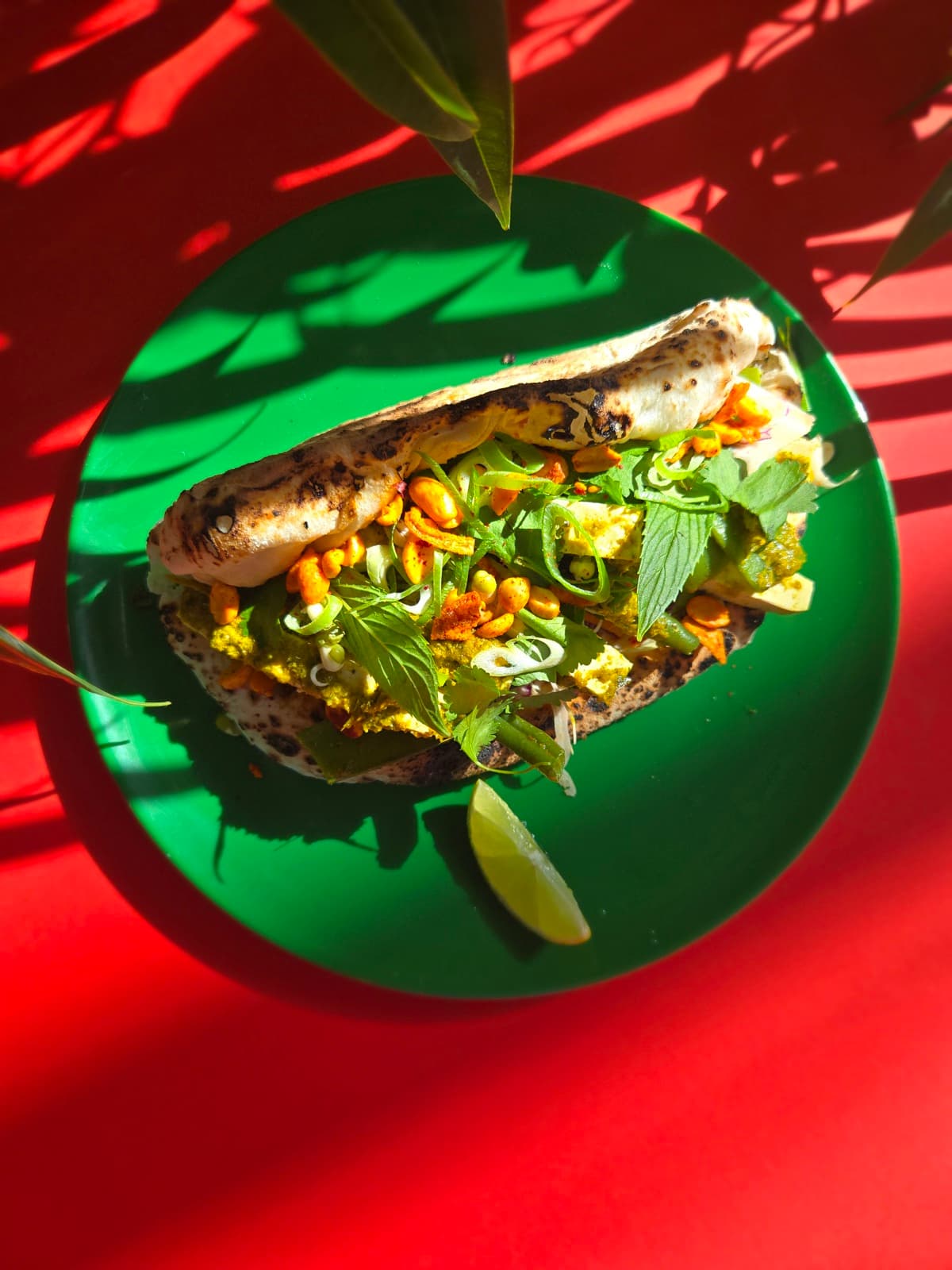
That sandwich is the Thai High, and the paste is the whole story.
What's in the paste (and why it matters)
Walk into most cafés in Sydney that serve "Thai-style" anything and you'll find a jar of green curry paste sourced from a wholesaler, mixed with coconut cream, and called done. Nothing wrong with that — it feeds people, it tastes fine.
We just don't do it that way.
Our paste is built every week from green chillies, lemongrass, galangal, kaffir lime leaf, coriander root, garlic, shallot, white peppercorn, shrimp paste (we have a vegan version too — fermented soy in place of shrimp), and a fistful of fresh coriander leaf right at the end. Pounded in a mortar, the way it's done by people who have done it for generations. Not blitzed in a Vitamix.
The difference is texture. A pounded paste has air in it. The aromatics release oils slowly, layer by layer. Blitzed paste tastes flat compared to pounded — you'll only notice once you've had both, but you can't un-notice it.
Tofu that earned its place
The tofu is firm, pressed for an hour to lose water, cubed, blanched in the curry until it drinks the flavour into itself. Then it goes onto the grill — yes, the same fire that does the chicken Ozzos — to get char on three sides.
That char is the trick. Tofu without char is a texture problem. Tofu with char is the bite people remember.
Around the tofu: green-curried veggies (snake beans, snowpea, eggplant, bamboo shoot — whatever the market gave us that morning), all simmered in the same paste, all carrying the same flavour.
Why it's vegan by default
Most sandwich shops do this the other way around. Chicken sandwich on the menu, vegan as an asterisk.
We flipped it. The Thai High is vegan as the headline. Chicken is the +$1 upgrade for the people who want it.
That's a small decision with a big reason behind it. If you build a vegan dish well — properly seasoned, properly textured, properly fed — most people don't miss the meat. They just notice the food. Building meat-first and then making a vegan version is how vegan options end up tasting like an apology. Building vegan-first and adding meat as an option respects both eaters.
Also: tofu absorbs the curry better than chicken does. The headline ingredient gets the flavour. The optional upgrade has to compete on its own terms.
The satay layer
Spread thinly across the bottom of the focaccia: house satay. Peanuts roasted in-house (we get them green, roast them slow, blend them with a touch of tamarind and palm sugar), thinned with coconut cream and finished with a squeeze of lime.
It's the bridge. The satay carries the sweet that the curry's heat needs. Without it, the sandwich is hot-then-hot. With it, the sandwich is hot-sweet-cool, which is how Thai food has always worked when it's done right.
The slaw and the herbs
Asian slaw: shredded white cabbage, carrot, red cabbage for colour, dressed in fish sauce caramel (vegan version: tamari caramel — no compromise). Crunch.
Herb salad: Thai basil, mint, coriander. Whole leaves, generous handful, last thing on top before the lid goes on. The herbs are not garnish. They're an ingredient.
What it costs and where to eat it
$19 at both Pyrmont and Marrickville. Chicken upgrade is +$1.
Eat it warm. The curry sets when it cools — it's still good cold, but the way the flavours move on your tongue when the satay is still soft and the slaw is still crunching against the warm tofu? That's the version we built.
Why we bother
Because there's a lazy version of this sandwich on every food court in Sydney. Sweet sauce, fried tofu, iceberg lettuce, three slices of cucumber, gone in eight bites and forgotten.
We didn't want to make that. We wanted to make the sandwich a Thai grandmother might make if she ran a café in Marrickville. Pounded paste. Real char. Herbs that smell like herbs. Heat that earns its place.
It's a sandwich.
But it's also our way of saying: building Thai food the easy way is fine for most. It just isn't the version we want to put our name on.
The bread under the paste is the Ozzo — three days of patience, baked fresh. Read the bread story →
Order at Pyrmont or Marrickville →
More from the journal
Very Saucy Meatballs: the meatball sub, taken seriously
Holly Birria: slow-braised beef, a crisp Ozzo, and a dip you pour